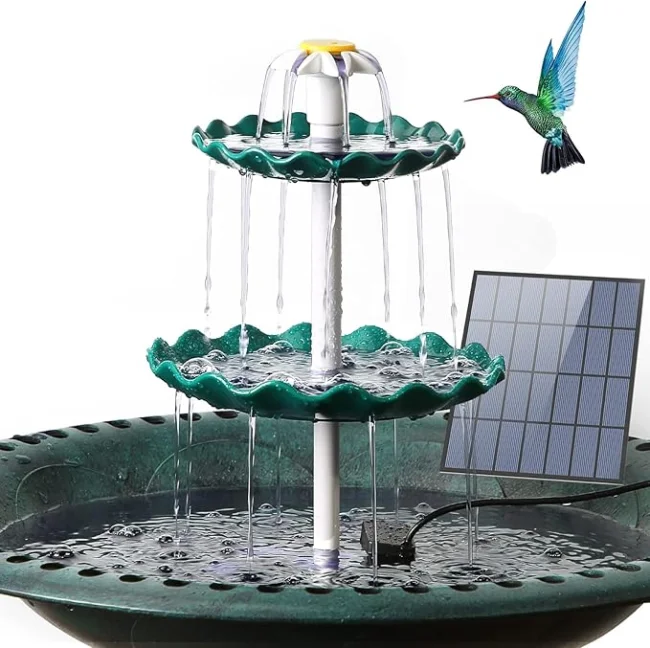
AISITIN Solar Fountain Pump Review – Honest Testing & Real-World Performance
Solar-powered water features have become increasingly popular with UK gardeners who want movement, sound, and wildlife appeal without running cables or increasing electricity bills. The AISITIN Solar Fountain Pump is one of the more widely advertised options in this category, promising simple installation, multiple spray patterns, and reliable performance using nothing but sunlight.
I decided to properly test the AISITIN solar fountain pump because, on paper, it looks like an ideal solution for small garden ponds, bird baths, and decorative water bowls. However, solar fountains can be hit or miss—many struggle in anything less than direct sun, clog easily, or simply stop working after a few weeks.
This review is based on real-world use in typical UK conditions, including mixed sunlight, debris from trees, and daily on-off cycling. I’ll cover how it performs, where it falls short, and whether it’s actually worth buying compared to cheaper or more robust alternatives.
If you’re considering a solar fountain for a bird bath or pond, this review should give you a clear, realistic picture before you spend your money.
What Is the AISITIN Solar Fountain Pump?
The AISITIN Solar Fountain Pump is a compact, solar-powered water pump designed to float directly on the surface of water. It uses a built-in solar panel to power a small internal motor that pushes water upward through interchangeable spray nozzles.
It’s intended for:
· Bird baths
· Small ponds
· Shallow water bowls
· Wildlife-friendly garden features
Because it doesn’t require wiring, batteries, or a mains connection, it’s aimed squarely at low-maintenance garden setups where simplicity matters more than high pressure or tall water jets.
Who it’s for:
· Gardeners wanting movement without electricity
· Wildlife-friendly gardens
· Small decorative water features
Who it’s not for:
· Deep ponds
· Large water displays
· Shaded gardens with limited direct sun
Key Features & Specifications
Based on testing and product configuration, here’s what the AISITIN solar fountain pump offers:
· Power source: Integrated solar panel (no battery)
· Installation: Floating, no tools required
· Nozzles: Multiple interchangeable spray heads
· Pump type: Submersible micro pump
· Best water depth: Shallow (bird baths / bowls)
· Operation: Runs only in direct sunlight
· Maintenance: Requires regular cleaning in debris-heavy areas
The lack of a battery is both a strength and a weakness, which I’ll explain in more detail later.
Build Quality & Design
For a lightweight solar fountain, the build quality is decent but clearly budget-focused. The plastic housing feels solid enough for outdoor use, though it doesn’t have the thickness or weight of premium pond equipment.
The solar panel is sealed well and handled exposure to rain without issues during testing. However, like most floating fountains, the lightweight design means it can drift, especially in shallow bird baths unless you anchor it.
In UK conditions:
· Rain exposure: No issues
· UV exposure: No immediate degradation
· Wind: Can cause movement or tilting
It’s not fragile, but it’s not something you’d expect to last a decade either.
Performance in Real-World Use
This is the most important section, and where solar fountains either earn their place or disappoint.
Sunlight Dependency
In full, direct sunlight, the AISITIN fountain performs exactly as advertised. The water flow starts quickly, spray height is consistent, and the pump runs smoothly without stuttering.
However, performance drops sharply when:
· Clouds pass over
· The sun shifts behind buildings
· The panel gets partially shaded
There’s no battery buffer, so the fountain stops almost immediately when sunlight fades. This is typical for this type of solar fountain, but it’s important to be realistic—this is a midday feature, not an all-day one.
Water Flow & Spray Patterns
The interchangeable nozzles do make a visible difference. Some produce a gentle bubbling effect, while others create taller, narrower sprays.
In my testing:
· Lower spray heads worked best for bird baths
· Taller sprays increased splash and water loss
· Wind affected taller spray patterns noticeably
For wildlife use, gentler spray heads are the better option.
Reliability Over Time
Over several weeks of regular use:
· The pump remained functional
· Performance only dropped when debris built up
· Restarted reliably after cleaning
This is where cheaper solar fountains often fail, so credit where it’s due.
Comfort, Ergonomics & Handling
There’s no physical “handling” during operation, but setup and maintenance are straightforward.
What I liked:
· No tools required
· Easy nozzle changes
· Simple lift-out cleaning
What could be better:
· Lightweight design makes positioning tricky
· Needs occasional re-centering in shallow water
Even so, it’s beginner-friendly and doesn’t require technical knowledge.
Pros & Cons
Pros
- Completely solar powered (no wiring or electricity)
- Easy to install and remove
- Multiple spray options for different setups
- Encourages birds and wildlife
- Low maintenance when cleaned regularly
Cons
- Stops instantly without direct sunlight
- Can drift in shallow bird baths
- Not suitable for shaded gardens
- Limited power compared to wired pumps
Who Is This Product Best For?
The AISITIN solar fountain pump is best suited to:
· Beginner gardeners experimenting with water features
· Bird lovers creating a wildlife-friendly garden
· Small gardens or patios
· Temporary or seasonal setups
It’s less suitable for:
· Large ponds
· Heavily shaded gardens
· Users wanting continuous water movement
How It Compares to Alternatives
Compared to cheaper solar fountains, the AISITIN model is more reliable and easier to maintain. Many low-cost pumps fail quickly or clog constantly.
Compared to premium solar fountains with battery backup, it’s less versatile. Battery-assisted models offer evening operation and better consistency—but they cost more.
If budget is tight and expectations are realistic, this sits comfortably in the middle.
Long-Term Value & Maintenance
Maintenance is simple but essential.
Cleaning
· Rinse filter every 1–2 weeks
· Remove algae or debris buildup
· Keep solar panel clean
Storage
· Bring indoors during frost
· Drain before winter
With basic care, it should last multiple seasons, though winter storage is strongly recommended in the UK.
Final Verdict: Is It Worth Buying?
The AISITIN Solar Fountain Pump is a solid choice if you want a simple, wildlife-friendly water feature without electricity. It performs well in direct sunlight, is easy to maintain, and does exactly what it claims—provided you understand its limitations.
It’s not a replacement for a wired pond pump, and it won’t run all day in cloudy weather. But for bird baths, shallow ponds, and decorative bowls, it offers good value and reliable performance for its category.
Worth considering if:
You want a low-effort, solar-powered fountain for occasional daytime use.
Frequently Asked Questions
Is the AISITIN solar fountain pump suitable for beginners?
Yes. Installation is straightforward, requires no tools, and maintenance is minimal. It’s a good entry-level option for gardeners new to solar water features.
Does the AISITIN solar fountain pump work in cloudy UK weather?
It will run in light cloud if sunlight is strong enough, but performance drops significantly. It works best in direct sun.
Can it be used in a bird bath?
Yes, and this is one of its best uses. Lower spray heads work well and reduce water splash.
Does the pump clog easily?
Like all small fountains, it can clog if debris builds up. Regular cleaning prevents issues.
Is it worth the price compared to cheaper solar fountains?
In my experience, yes. Cheaper models often fail early or perform inconsistently.
